- 0888 796 233
- office@aswm.net
- Пон. - Пет.


ASWM Pilot Measures in Blagoevgrad
Fourth meeting of the HEATSAFE stakeholder network
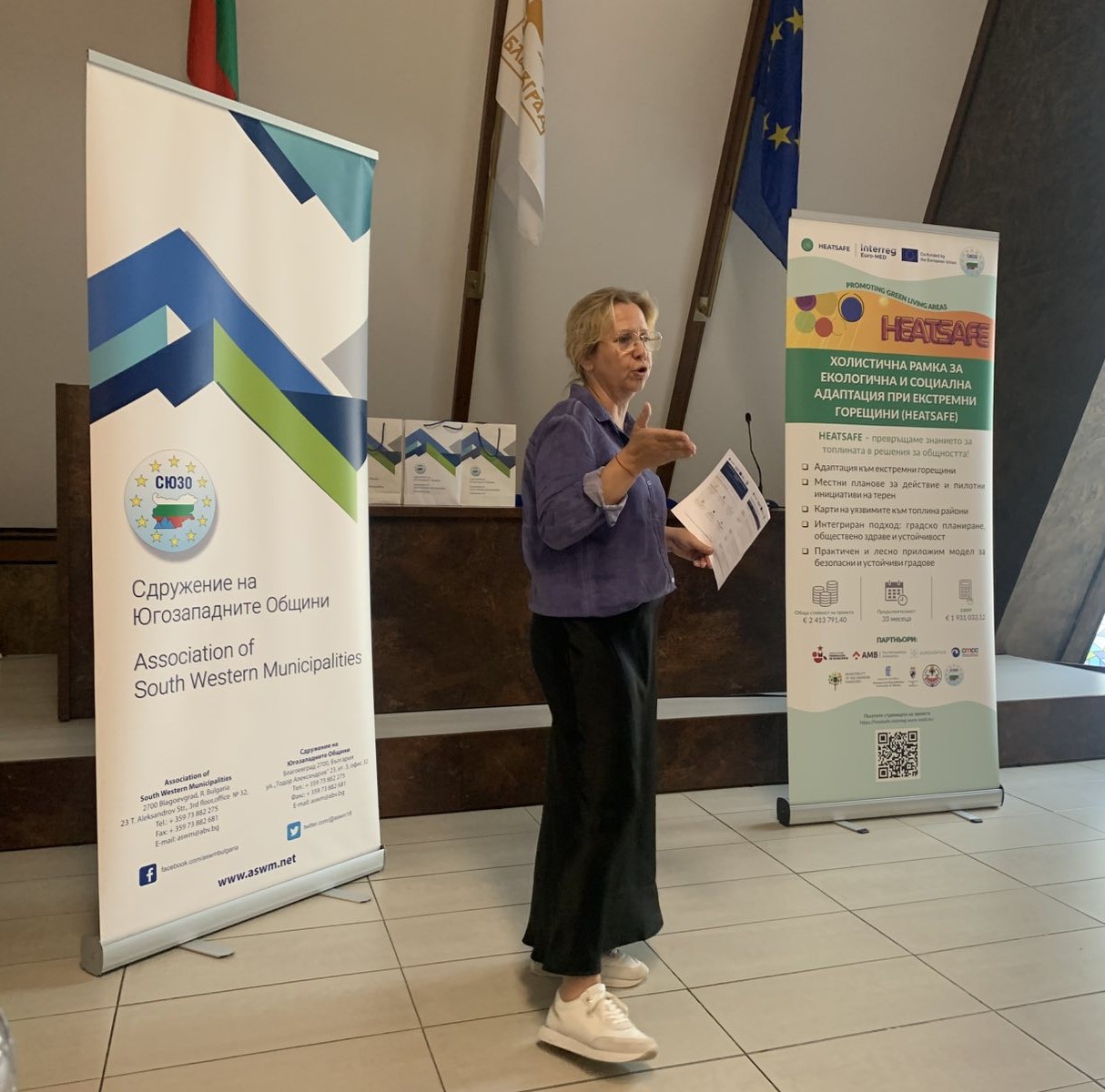
On 30 June 2026, the Association of South-Western Municipalities (ASWM) held the third meeting of the Stakeholder Network under the HEATSAFE – Holistic Framework for Environmental and Social Adaptation to Extreme Heat project, co-funded by the Interreg Euro-MED Programme 2021–2027. The meeting took place at the Municipality of Blagoevgrad. It brought together representatives of public authorities and key stakeholders involved in developing local measures to address the impacts of extreme heat.
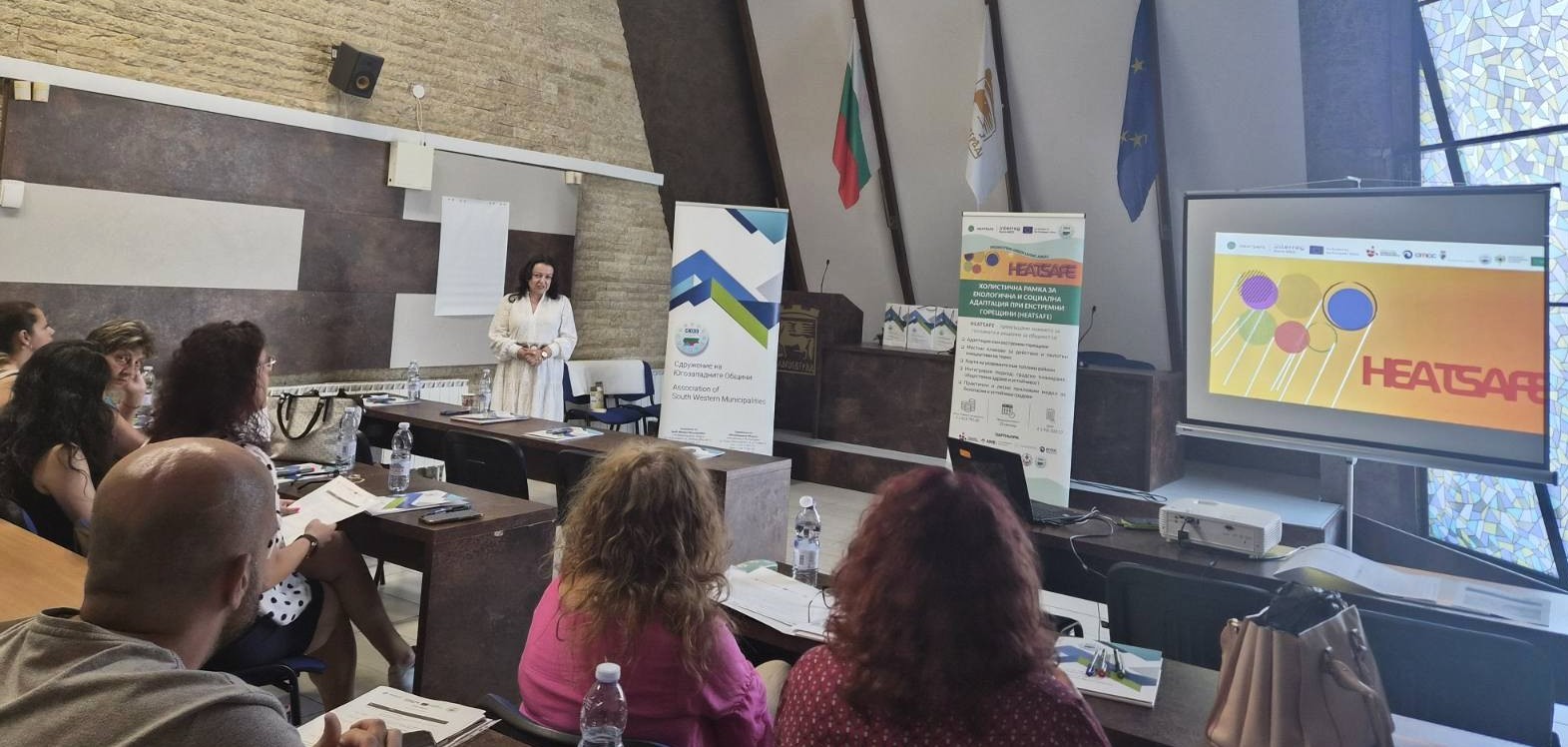
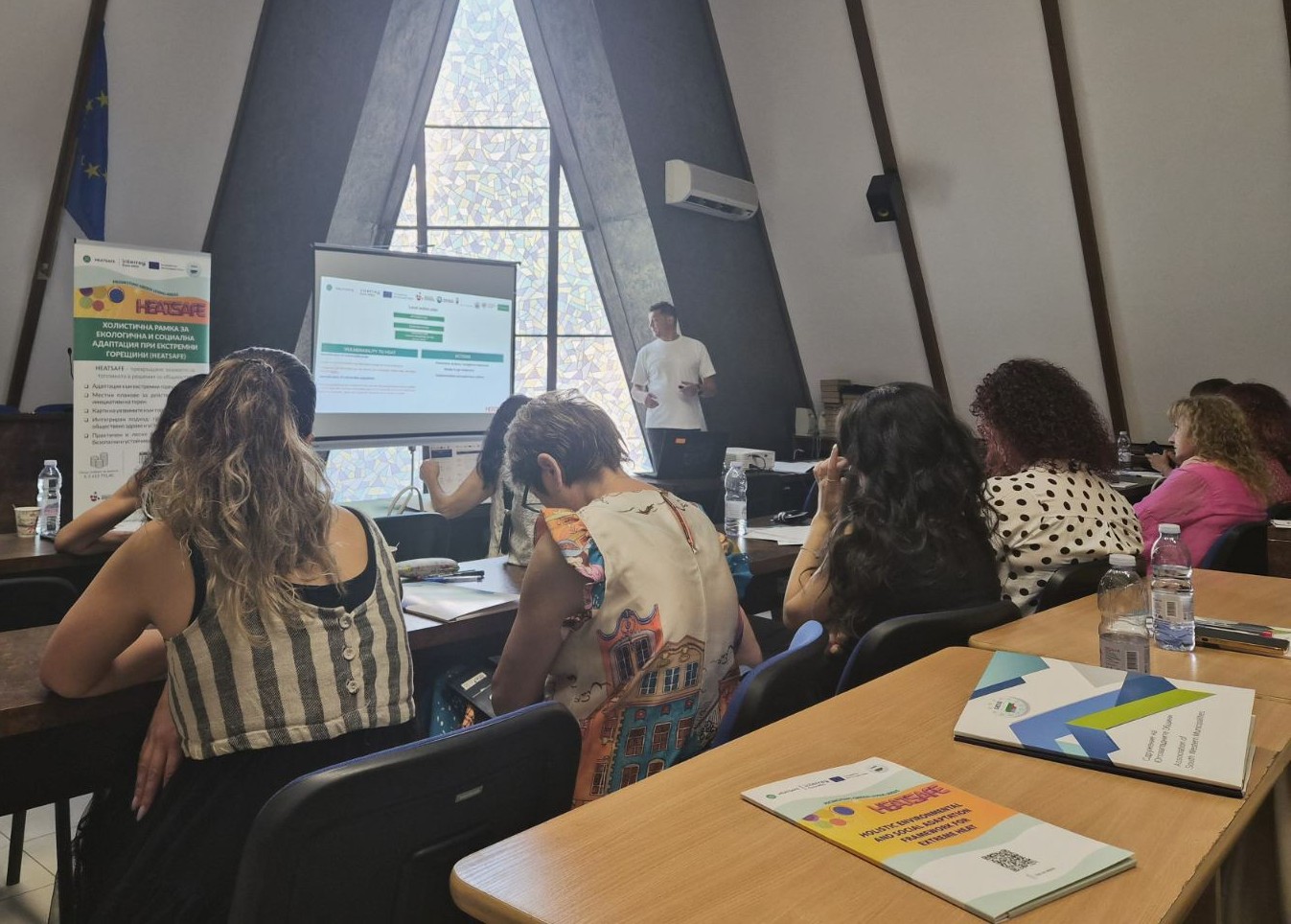
The meeting focused on the draft Local Action Plan, including response protocols for heatwaves, the identification of urban climate shelters, and the communication campaign planned for the summer of 2026. Participants underlined that the proposed protocols are designed to complement, rather than replace, the existing emergency and disaster response mechanisms.
Participants agreed that the HEATSAFE approach is both timely and necessary, as increasingly frequent and prolonged heatwaves require dedicated local planning and stronger institutional coordination. The Local Action Plan aims to improve preparedness, enhance cooperation among responsible authorities, and strengthen the protection of vulnerable population groups during extreme heat events.
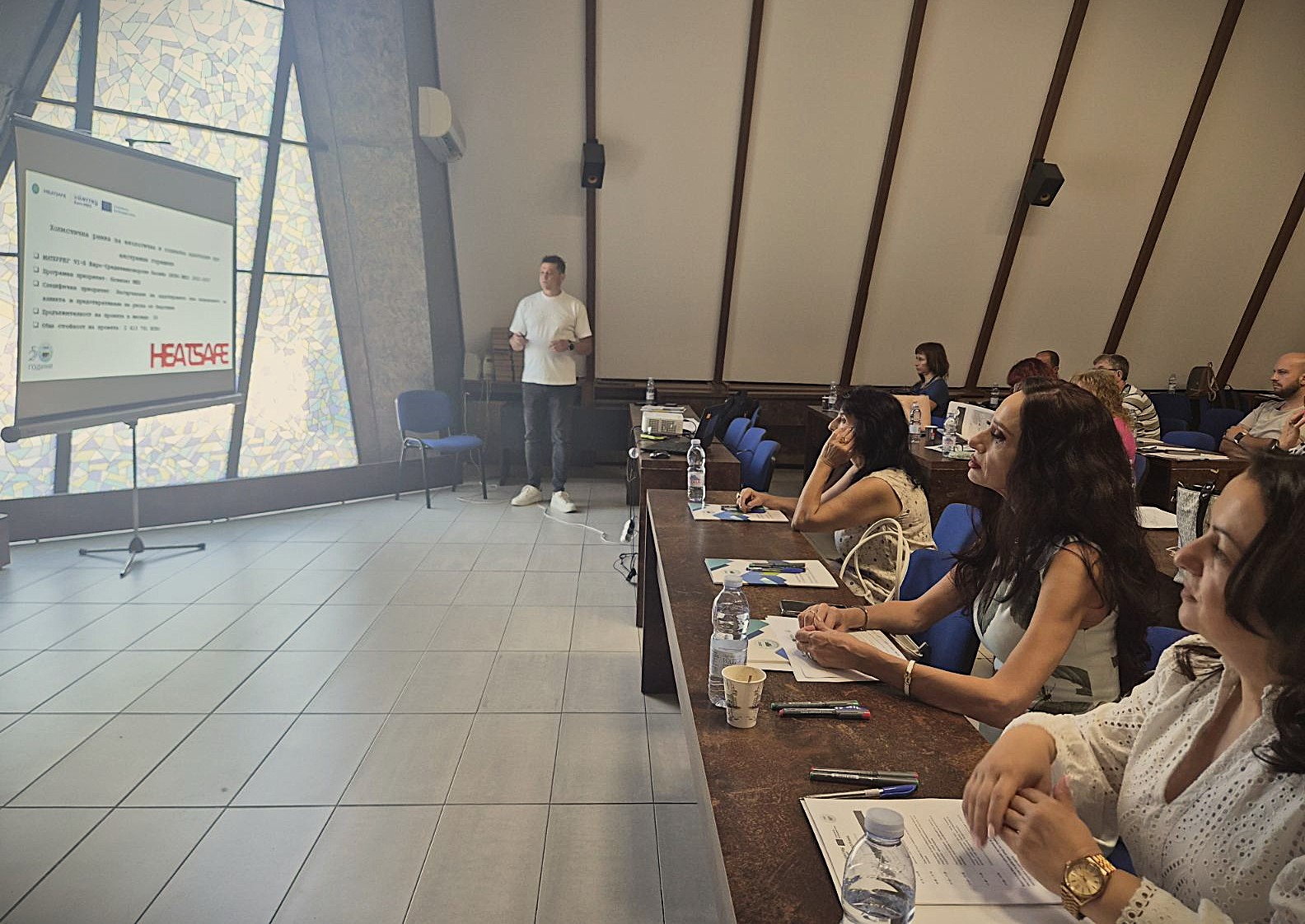
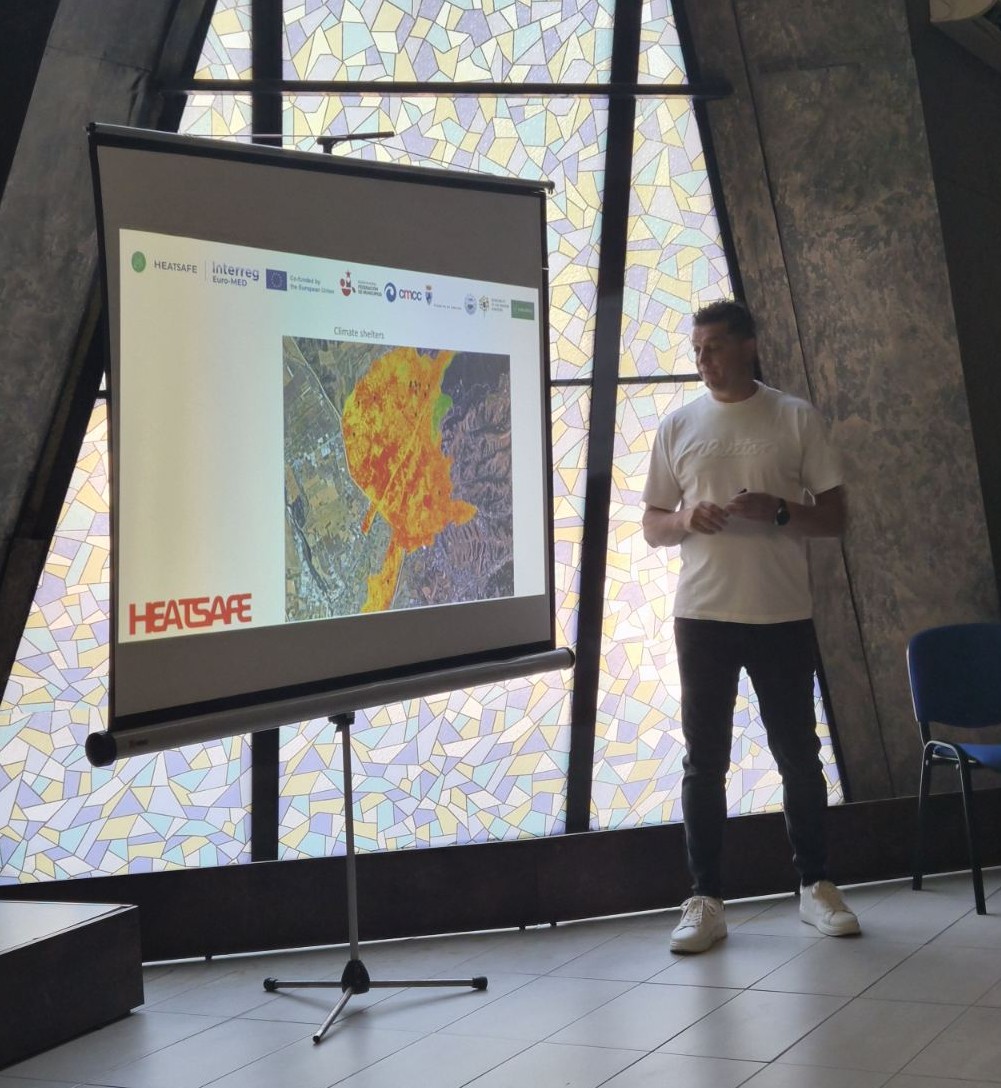
As a practical demonstration, ASWM presented real-time temperature data collected from sensors installed on the roof of the Municipality of Blagoevgrad building. The live monitoring illustrated the impact of urban heat and reinforced the need for evidence-based adaptation measures.
The project's associated partners – the Municipality of Blagoevgrad and the Regional Administration of Blagoevgrad – reaffirmed their commitment to supporting the development of the Local Action Plan. Representatives of the Regional Administration also presented the national BG-ALERT early warning system, whose functionality will be considered in developing local protocols for responding to extreme heat.
Particular attention was given to the analysis of information submitted in advance by members of the Stakeholder Network, including the Regional Inspectorate of Environment and Water, the Regional Health Inspectorate, and the Centre for Emergency Medical Care in Blagoevgrad. Based on these contributions, participants reviewed the proposed measures, identified opportunities for further improvement, and provided recommendations that will be incorporated into the final version of the Local Action Plan.
The project will continue with two additional Stakeholder Network meetings and a capacity-building training programme for local institutions and organisations. The continued engagement of all stakeholders remains essential for delivering an effective and practical Local Action Plan for Blagoevgrad.
ASWM Presented the HEATSAFE Project

Green B-LEAF: Green Participatory Budgeting for Local Environmental Action and sustainable Future empowers rural Mediterranean communities to drive climate adaptation and sustainability through Green Participatory Budgeting (Green PB). By equipping municipalities and residents with data-driven tools and methodologies, the project fosters community-led climate action.
Through collaboration across 8 countries, Green B- LEAF develops and pilots tailored budgeting frameworks, enhances institutional capacity, and promotes community ownership. Outputs include a Green PB methodology, Green Budget Tagging toolkit, pilot projects, and a transnational knowledge-sharing network. The project integrates New European Bauhaus values and ensures long-term impact through community engagement and policy alignment.
The overall Green B-LEAF objective is to enhance climate resilience and sustainability in rural Mediterranean communities through participatory budgeting and data-driven planning. The project therefore addresses challenges such as low community participation in climate planning and budgeting in rural areas; environmental degradation and limited adaptive capacity, lack of tools for assessing the climate impact of local budgets; disconnection between data and local decision-making, and a need for tailored, inclusive, and practical policy tools in small municipalities
Programme: Interreg Euro-MED 2021–2027
Mission: Green Living Areas
Specific Objective: RSO2.4: Promoting climate change adaptation and disaster risk prevention, resilience, taking into account eco-system based approaches
Duration: 33 months
Total Project Budget: € 2.251.263,00
Number of Partners: 11
Number of Countries: 8
Project web page: https://greenb-leaf.interreg-euro-med.eu
ASWM Hosts Second HEATSAFE Working Meeting with Local Stakeholders in Blagoevgrad

The project HEATSAFE (Holistic EnvironmenTAl and Social Adaptation Framework for Extreme heat) directly tackles the need to adapt against climate change adverse effects in the whole Mediterranean area. The intensity of heatwaves is amplified in urban areas by factors such as the configuration of the city, the lack of vegetation or the materials of urbanized surfaces, so the strategy to mitigate their effects must be designed specifically for each territory.
Sociodemographic conditions must also be considered, as significant correlation between exposure to extreme heat and socioeconomic vulnerability has been shown, leading to nearly double the mortality risk in some deprived districts. This local complex planning cannot be addressed without a clear methodology.
In this sense, HEATSAFE will address the most suitable ways to adapt these territories to these effects by developing key activities in Spain, Italy. Albania, Bulgaria and Greece, and with the aim of replicating project approach in the whole Mediterranean area. HEATSAFE will improve the prevention, mitigation and management of risks arising from increased frequency and intensity of extreme heat and heatwaves in the Mediterranean basin through the co-development of local action plans and the implementation of demonstrative pilot actions; complemented by a long-term strategy and open-source tools to establish heat vulnerability maps across the MED area.
The project will produce several outputs to achieve project objectives:
- Decision-making tool for policymakers to evaluate and prioritize heatwaves measures based on impact, feasibility, and cost-effectiveness.
- Governance structures for effective heatwaves management, including stakeholder mapping and engagement strategies, benefiting six Mediterranean regions.
- Local Action Plans in six pilot partners and five EU countries for heatwaves preparedness, response, communication, and recovery, aiding local authorities and communities.
- Testing activities in six Mediterranean areas will implement and evaluate solutions, resulting in a protocol for best practices to mitigate heatwaves which will benefit not only project partners, but the whole MED area through transferring and replication activities.
- Аn improved heatwaves planning and management strategy for the Mediterranean basin so the project approach can be adopted by other areas.
HEATSAFE will adopt a comprehensive, interdisciplinary approach that integrates urban planning, public health, social equity, and environmental sustainability to develop and test methodologies and solutions for preventing heatwave risks in the Mediterranean urban context. The methodology is built upon 4 main ideas:
- Develop a heat vulnerability map for each project area, incorporating both physical and socioeconomic indicators, to inform action planning.
- Create new multi-level governance structures to ensure community engagement and participatory decision-making for contextually appropriate solutions.
- Test interventions based on cutting-edge research and best practices, focusing on climate shelters, immediate response solutions, and awareness-raising measures.
- Collaborate with stakeholders to build capacity, foster innovation, and facilitate knowledge exchange.
The proposed methodology will be tested in various European municipalities to validate its effectiveness and suggest improvements transferable to other Mediterranean areas. Implementing pilot actions in different countries will be crucial for comparing results and understanding local circumstances, enabling the sharing of findings and methodologies to maximise impact. The project will pool resources, share expertise among various actors, and align policies. Collaboration will help regions address challenges more effectively, enabling project results to be upscaled across the entire Mediterranean basin.
HEATSAFE's innovation lies in its direct approach to the complex, interconnected challenges that climate change presents in the Mediterranean region, utilising a comprehensive and interdisciplinary strategy. By incorporating socioeconomic factors into heat vulnerability maps, it exceeds current practices to deliver tailored solutions that address heatwave impacts and prioritise the most at-risk groups. HEATSAFE emphasises community engagement and participatory decision-making, establishing new governance structures that integrate urban planning, public health, social equity, and environmental sustainability. Furthermore, HEATSAFE utilises cutting-edge research and best practices in its interventions while encouraging collaboration among diverse stakeholders to enhance capacity and facilitate knowledge exchange. This multi-faceted strategy not only effectively mitigates heatwave risks but also creates a replicable and scalable model for the entire Mediterranean region.
Partners: LP: Federation of Municipalities of the Region of Murcia, Spain PP2: EuroVértice Consultants, Spain PP3: Barcelona Metropolitan Area, Spain PP4: Municipality of Agii Anargiri – Kamatero, PP5: Association of South-Western Municipalities, PP6: Regional Council Durres, Albania PP7: Municipality of Arezzo,Italy PP8: National Kapodistrian University of Athens, Greece PP9:Euro-Mediterranean Center on Climate Change Foundation, Italy
Associated partners to ASWM: 1) Municipality of Blagoevgrad 2) Regional Administration Blagoevgrad
Donor: Interreg Euro Mediterranean VI B 2021-2027
Programme priority: 2 - Greener MED
Specific objective: RSO2.4 - Promoting climate change adaptation and disaster risk prevention, resilience, taking into account eco-system based approaches
Budget: 2.413.791,40 EURO
Duration: 33 months (01-04-2025 - 23-12-2027)
Project website: https://heatsafe.interreg-euro-med.eu/